
Rehab has ended, but the hope has not
Progress was steady at first, then slowed. Discharge came, but there is still more you want to recover.
Home / Who we help / Acquired brain injury
Brain injury, adults and children
After a brain injury, formal rehabilitation often stops long before learning has to. ABM NeuroMovement works with the brain's ability to reorganise, giving it clear, gentle information so it can find new ways to move, balance and engage. We work with adults and children after traumatic and acquired brain injury, and with children affected by HIE.
You are not alone
Some people come to us months or years after an injury, when formal support has sadly wound down.
Progress was steady at first, then slowed. Discharge came, but there is still more you want to recover.
Walking, reaching or sitting up takes concentration and energy that used to be automatic.
Falls, near misses or a fear of falling that shrinks everyday life.
Fatigue, focus and mood are affected too, and the whole family is adjusting.
How we work
Rehabilitation usually focuses on the arm, leg or skill that is not working, and practises it. We look at how the brain is organising the whole body around the injury: the ribs, the pelvis, the breath, the unaffected side.
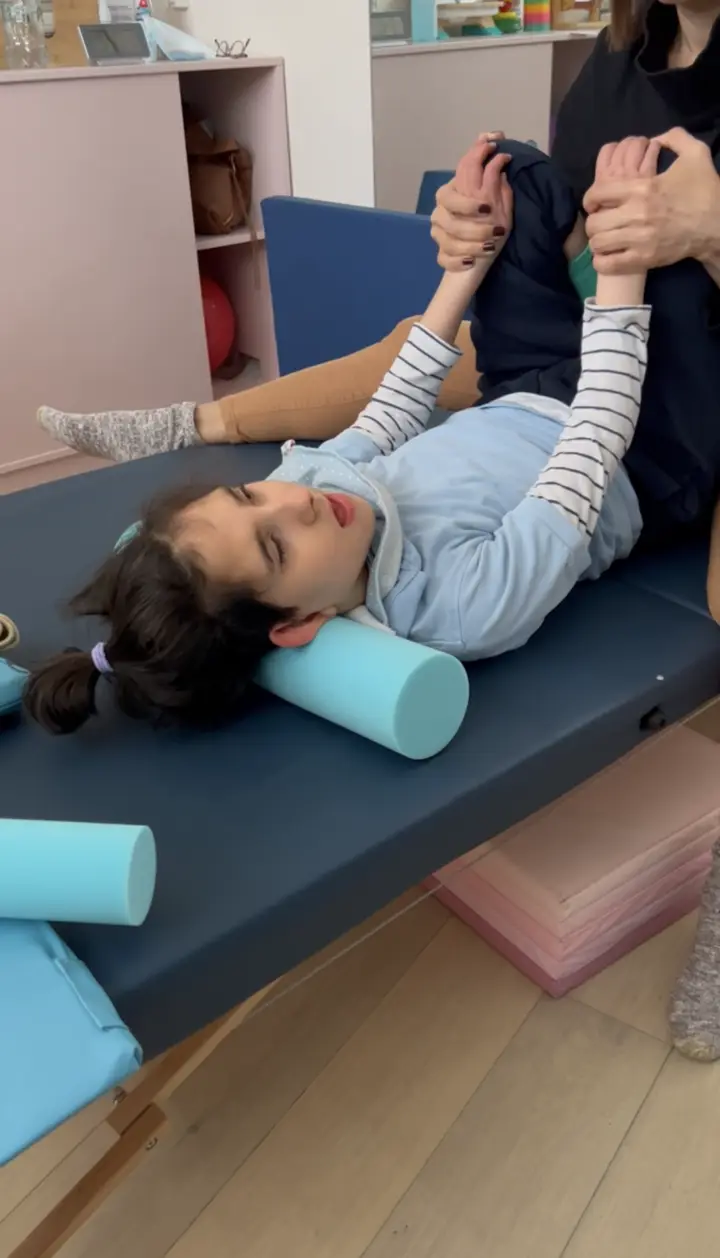
Using slow, gentle touch and many small variations of movement, the practitioner gives the brain a clearer picture of the whole. With that, it can find better solutions of its own. Lessons are calm and never forced, which matters for a nervous system that tires easily.
What we typically see is a steady return of control, balance and ease, sometimes in movements that were never directly worked on.
Every person is different, and we cannot promise specific outcomes. We will always tell you honestly what we see.
Watch
Common questions
No. The brain keeps its capacity to learn throughout life. Many of the adults we work with come to us years after their injury.
Yes. We are happy to work with case managers, deputies and solicitors, and can provide clear information, invoices and progress notes. Information for professionals.
Yes. Children affected by hypoxic ischaemic encephalopathy can be very responsive to this work, and even small gains in comfort and awareness can make a real difference to family life.
There is no set recipe. Most people start with an intensive of 6 to 10 lessons over three to five days. You may notice changes quickly, but learning that lasts and becomes part of everyday life takes time.
Think about learning anything new: how far you go depends partly on how much time you put in. In any maths class, some students grasp a problem straight away and others need longer, but with the right approach everyone moves forward. The brain builds on what it learns, so people who continue month by month, often for three months or more, tend to see the deepest change. We will always tell you honestly what we see.
Next dates
Intensives usually run from Wednesday to Sunday, though the format sometimes differs. These are the dates for our visiting international practitioners, and for weekend lessons at our centre. Places are limited, so book ahead to secure your dates.
New dates are being arranged. Ask us and we will tell you what is coming up.
Getting started
The enquiry form takes about a minute. It helps us prepare, so your call is about you rather than general questions.
Around 20 minutes. We talk through what you have tried and what you are hoping for, and share fees and availability. If we do not think we can help, we will say so.
Most people start with an intensive of 6 to 10 one to one lessons over a few days. Intensives with our visiting international practitioners are £870 for 6 lessons or £1,450 for 10, and your first intensive is at our introductory rate: £810 for 6 or £1,350 for 10.
Received
We have also sent you an email with a copy of the next steps.
Would you like to choose a time now? Book a 20 minute call with us at a time that suits you.
Book a callIf anything is urgent, call us on 07873 990399.