
Recovery has slowed or stopped
The early gains came, then slowed. You have been told this may be as good as it gets, and you are not convinced.
Home / Who we help / Stroke
Stroke, adults
Formal stroke rehab often ends while you still have more to recover. ABM NeuroMovement works with the brain's lifelong ability to learn, using gentle, one to one lessons to help it find easier, steadier ways to move. We start with what you can already do, not with what you have lost.
You are not alone
Most people we see after a stroke have worked hard in rehab. These are the things they tell us.
The early gains came, then slowed. You have been told this may be as good as it gets, and you are not convinced.
Practising the same exercises over and over is exhausting, and the affected side still feels out of reach.
A fear of falling, a stiff arm or a dragging foot that makes ordinary days harder.
Getting dressed, walking to the shops, picking up a grandchild. The everyday things matter most.
How we work
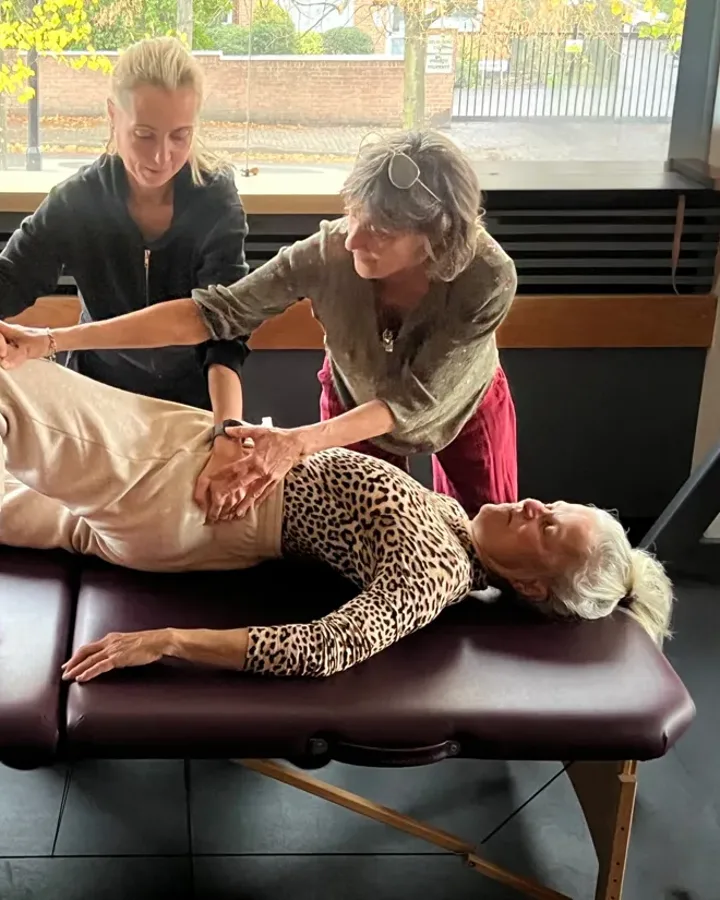
Instead of repeating a movement the brain cannot yet organise, an ABM NeuroMovement lesson gives it small, clear differences to notice. The practitioner works with the whole body, including the side that was not affected, so the brain can rebuild a clearer map of itself.
Lessons are slow, gentle and calm. Many people say they are the first time in a long while that moving has felt easy rather than effortful. From that ease, new control can grow.
Every person is different, and we cannot promise specific outcomes. We will always tell you honestly what we see.
Common questions
Yes. The brain keeps its capacity to learn throughout life, and some of the people we work with come to us many years after their stroke. One of our clients travelled from Cambridge for regular intensives.
You lie on a low, padded table, or sit, fully clothed. The practitioner uses gentle touch and small movements, and may guide you to notice how you are moving. Lessons last up to 45 minutes and are never forced.
There is no set recipe. Most people start with an intensive of 6 to 10 lessons over three to five days. You may notice changes quickly, but learning that lasts and becomes part of everyday life takes time.
Think about learning anything new: how far you go depends partly on how much time you put in. In any maths class, some students grasp a problem straight away and others need longer, but with the right approach everyone moves forward. The brain builds on what it learns, so people who continue month by month, often for three months or more, tend to see the deepest change. We will always tell you honestly what we see.
Next dates
Intensives usually run from Wednesday to Sunday, though the format sometimes differs. These are the dates for our visiting international practitioners, and for weekend lessons at our centre. Places are limited, so book ahead to secure your dates.
New dates are being arranged. Ask us and we will tell you what is coming up.
Getting started
The enquiry form takes about a minute. It helps us prepare, so your call is about you rather than general questions.
Around 20 minutes. We talk through what you have tried and what you are hoping for, and share fees and availability. If we do not think we can help, we will say so.
Most people start with an intensive of 6 to 10 one to one lessons over a few days. Intensives with our visiting international practitioners are £870 for 6 lessons or £1,450 for 10, and your first intensive is at our introductory rate: £810 for 6 or £1,350 for 10.
Received
We have also sent you an email with a copy of the next steps.
Would you like to choose a time now? Book a 20 minute call with us at a time that suits you.
Book a callIf anything is urgent, call us on 07873 990399.